Yu (yū) — Blood Stasis: Qi and Blood Obstruction
Part 1A Question
Have you ever noticed that when you bump your body against a table corner, the skin doesn't break, but a purple-black bruise appears inside, painful to touch, and the color takes two full weeks to go from purple to yellow to disappear?
Have you ever found that some women experience menstruation like "going through hell" every time — severe lower abdominal pain, dark red blood clots, scanty flow, and painkillers only help for a while? Even more bizarre, some people have long-term dark complexion, dry skin, and purple lips, but blood tests are completely normal, yet TCM says they have a "blood stasis constitution" and need to "activate blood and resolve stasis"?
You ask: If "blood stasis" is not just subcutaneous bruises, then what exactly is it? Why does TCM say "long illness enters the collaterals" and "long illness often involves stasis"? Why is coronary heart disease called "chest bi syndrome with blood stasis," and stroke called "blood stasis blocking the collaterals"? Why do postoperative wounds form adhesions, and TCM says it is "blood stasis internally retained"? If stasis is "qi and blood obstruction," what is its modern physiological equivalent? Is it thrombosis? Microcirculatory障碍? Tissue fibrosis? Or hypoxia?
Another question: Why can blood-activating and stasis-resolving herbs (such as Salvia, Notoginseng, and Safflower) treat so many seemingly unrelated diseases — from menstrual pain to coronary heart disease, from traumatic injuries to senile dementia? Do they have a common therapeutic target?
What is stasis, really? TCM calls it "qi and blood obstruction." Is that translation enough?
Part 2Traditional Chinese Explanation
The concept of "stasis" in TCM theory is a "core pathological concept" — describing a pathological state formed when qi and blood flow poorly and stagnate in the body. TCM believes: qi is the commander of blood, and blood is the mother of qi. Qi pushes blood to flow, and blood carries qi. If qi flow is not smooth (qi stagnation), blood stagnates; if blood stagnates (blood stasis), qi becomes even more blocked. Qi stagnation and blood stasis are cause and effect of each other, forming a vicious cycle.
— Shuowen Jiezi
"When qi flows, blood flows; when qi stagnates, blood stasis forms."
— TCM Classic
"Long illness enters the collaterals; long illness often involves stasis."
— Ye Tianshi, Linzheng Zhinan Yi An
"Blood that has left the meridians is stasis."
— Tang Rongchuan, Xuezheng Lun
The ancients observed that blood in the body normally circulates within the blood vessels, nourishing the whole body. But if certain causes lead to blocked blood flow — trauma, cold congelation, qi stagnation, qi deficiency, or heat evil — blood stagnates locally, forming "blood stasis."
Trauma-induced stasis = external force damaging blood vessels. Falls, injuries, and surgical trauma cause blood vessels to rupture, blood flows out of the vessels, and accumulates in tissue spaces — this is the subcutaneous bruise and hematoma. This is the most intuitive expression of "stasis."
Cold congelation-induced stasis = cold evil constricting blood vessels. Cold causes blood vessels to contract and blood flow to slow down, increasing blood viscosity and making thrombosis more likely. TCM says "cold congeals into blood stasis" — this is not mysticism, but the effect of temperature on blood vessels and blood rheology.
Qi stagnation-induced stasis = qi flow not smooth, blood follows qi stagnation. Emotional suppression, sedentary lifestyle, and high stress cause qi stagnation, blood loses its driving force, and gradually stagnates. This is the main cause of the modern "blood stasis constitution."
Qi deficiency-induced stasis = insufficient driving force. Insufficient heart qi (weak heart pumping function), insufficient spleen qi (poor digestion and absorption, insufficient qi and blood production), and insufficient kidney qi (poor metabolic and excretory function) cause blood to flow weakly, gradually forming blood stasis.
Heat evil-induced stasis = heat evil scorching blood. Febrile diseases (inflammation, infection) cause increased blood viscosity, slowed blood flow, local tissue congestion and edema, forming "heat and stasis intermingling."
So what the ancients called "stasis" is a functional pathological concept — describing various "stagnant, hypoxic" states in the body after qi and blood flow is obstructed. Not simply "blood coagulation," but blood flow not smooth → tissue hypoxia → metabolic waste accumulation → inflammatory response → impaired repair, a vicious cycle.
But stasis has one major characteristic: stasis follows qi movement; when qi moves, stasis dissipates. If qi movement is smooth, blood stasis is not easily formed or retained. If qi becomes stagnant, blood stasis condenses, expands, and causes disease. So treating stasis is not just about "activating blood and resolving stasis," but also about "regulating qi" — getting qi to move, pushing blood to flow.
Part 3giaogiao Modern Translation
Okay, now let's translate "stasis" into modern language.
I'm not going to explain TCM's qi and blood theory. Too abstract. You only need to remember one analogy:
Trauma-induced stasis = Blood vessel rupture → blood extravasation → tissue space blood accumulation (hematoma/bruise) → local inflammatory response → fibrous tissue repair
Cold congelation-induced stasis = Cold → blood vessel contraction (vasoconstriction) → slowed blood flow → increased blood viscosity (rouleaux formation) → platelet aggregation → thrombosis
Qi stagnation-induced stasis = Chronic stress/sedentary lifestyle → sustained sympathetic nervous system excitement → blood vessel spasm → microcirculatory障碍 → tissue hypoxia → metabolic waste accumulation (lactic acid, CO2)
Qi deficiency-induced stasis = Decreased heart function (reduced ejection fraction) → hemodynamic changes → blood stagnation → increased thrombosis risk
Heat evil-induced stasis = Inflammatory response → vascular endothelial damage → platelet activation → coagulation cascade → microthrombosis
Blood stasis constitution = Hypercoagulability + Microcirculatory dysfunction + Hemorheology abnormality
Blood stasis blocking collaterals = Thrombosis + Vascular stenosis + Tissue ischemia
Blood leaving the meridians = Extravasation + Tissue space blood accumulation + Hemosiderin deposition
Activating blood and resolving stasis = Antiplatelet aggregation + Improve microcirculation + Reduce blood viscosity + Enhance fibrinolysis + Anti-inflammatory + Protect vascular endothelium
That's it. "Stasis," essentially, is a series of "hypoxic-damaged-inflamed-fibrotic" pathological states in tissues after blood circulation is obstructed.
Specifically:
What does "trauma-induced stasis" correspond to? It corresponds to the tissue repair process after blood vessel rupture. Blood vessel rupture → blood flows into tissue spaces → hematoma (bruise) forms. Blood components (red blood cells, platelets, fibrin) activate inflammatory responses in tissue spaces — macrophages phagocytose dead red blood cells (producing hemosiderin, which is why bruises change from red → purple → yellow → disappear). Meanwhile, fibroblasts begin repair, producing collagen fibers. If repair is excessive, scars or adhesions form. TCM says "activating blood and resolving stasis promotes healing" — this is not mysticism, but promoting blood circulation → accelerating hematoma absorption → reducing fibrosis → reducing adhesions. Modern research: blood-activating and stasis-resolving herbs can improve local blood flow, promote hematoma absorption, and reduce fibrous tissue hyperplasia.
What does "cold congelation-induced stasis" correspond to? It corresponds to the effect of cold on blood vessels and blood rheology. Cold → blood vessel contraction (vasoconstriction) → slowed blood flow → increased blood viscosity (rouleaux formation of red blood cells) → increased platelet aggregation → microthrombosis. TCM says "cold congeals into blood stasis" — this is not "cold evil" mysticism, but the precise effect of temperature on vascular constriction and blood rheology. Modern research: for every 1°C decrease in ambient temperature, peripheral vascular resistance increases by about 5%, and blood viscosity increases by about 2%. This is why cardiovascular diseases are more common in winter.
What does "qi stagnation-induced stasis" correspond to? It corresponds to the effect of chronic stress on microcirculation. Chronic stress → sustained sympathetic nervous system excitement → continuous catecholamine (adrenaline, noradrenaline) release → small blood vessel spasm → microcirculatory障碍. Hypoxia causes cells to switch from aerobic oxidation to anaerobic glycolysis, producing large amounts of lactic acid, further affecting blood pH and viscosity. TCM says "qi stagnation leads to blood stasis" — this is not "qi" mysticism, but chronic stress → neuroendocrine imbalance → microcirculatory障碍 → tissue hypoxia, a precise pathological chain. Modern research: the nailfold microcirculation blood flow velocity in people with chronic stress is 20-30% slower than in normal people.
What does "blood stasis blocking collaterals" correspond to? It corresponds to thrombotic diseases. Coronary heart disease — coronary atherosclerosis + thrombosis → myocardial ischemia; stroke — cerebral atherosclerosis + thrombosis or embolism → brain tissue ischemic necrosis; lower extremity venous thrombosis — blood stagnation + hypercoagulable state → venous thrombosis. TCM says "blood stasis blocking collaterals" — this is not "collaterals blocked by blood stasis" mysticism, but thrombosis → vascular obstruction → tissue ischemic necrosis, precise pathology. Modern research: blood-activating and stasis-resolving TCM herbs (such as Salvia, Notoginseng, and Chuanxiong) have antiplatelet aggregation, anticoagulation, microcirculation improvement, and vascular endothelium protection effects — mechanisms that complement modern antithrombotic therapies (aspirin, warfarin).
So, "blood stasis" is not mysticism. It is a "comprehensive signal" of blood circulation障碍 — involving microcirculation, blood rheology, coagulation function, and vascular endothelium, the product of multiple systems going out of whack. The ancients used "stasis" to describe the "stagnant, hypoxic" state after blood flow is obstructed; modern people use "microcirculatory障碍," "blood hypercoagulation," "tissue ischemia," and "thrombosis" to describe it. The core logic is the same: when blood stops moving, tissues begin to "starve" and "become inflamed."
Part 4Life Cases
Four stories to instantly understand what "stasis" is.
Case 1: Menstrual pain (qi stagnation and blood stasis).
Every time your period comes, you have severe lower abdominal pain, like someone twisting a towel inside. The menstrual blood is dark red with many blood clots. Ibuprofen helps, but the pain returns next month. TCM says you have "qi stagnation and blood stasis" and treats you with Motherwort, Angelica, and Chuanxiong. You ask: why are blood clots in menstruation called "stasis"?
The truth: this is a manifestation of uterine microcirculatory障碍. During menstruation, the endometrium sheds, and the uterus contracts to expel menstrual blood. If local uterine blood vessels spasm (excess prostaglandin PGF2α), blood flow is not smooth, menstrual blood stays in the uterine cavity too long, blood coagulates and forms clots. Meanwhile, local hypoxia causes inflammatory responses, stimulating uterine smooth muscle spasm, producing severe pain. TCM's "activating blood and resolving stasis" treatment is not mysticism, but improving local uterine blood flow → reducing blood clot formation → reducing smooth muscle spasm → relieving pain. Modern research: blood-activating and stasis-resolving herbs (such as Angelica, Chuanxiong, and Safflower) can inhibit PGF2α synthesis, improve uterine microcirculation, and complement ibuprofen's mechanism.
Case 2: Coronary heart disease (blood stasis blocking collaterals).
You are in your fifties, with chest tightness and pain, especially when climbing stairs or during emotional excitement. The ECG shows myocardial ischemia, and coronary CT shows 70% vascular stenosis. Western medicine suggests stent placement, but you want to try TCM. TCM says you have "chest bi syndrome with blood stasis" and uses Salvia, Notoginseng, and Chuanxiong. You ask: the heart's blood vessels are blocked, how can Chinese herbs "resolve" it?
The truth: this is the "blood stasis" expression of coronary atherosclerosis. Long-term hyperlipidemia, hypertension, and hyperglycemia → vascular endothelial damage → low-density lipoprotein (LDL) deposits in vessel walls → inflammatory response → foam cell formation → plaque → vascular stenosis. Meanwhile, endothelial damage leads to platelet aggregation and thrombosis, further obstructing blood vessels. TCM's "blood-activating and stasis-resolving" herbs, modern pharmacology confirms: Salvia contains tanshinone, which dilates coronary arteries, inhibits platelets, and protects myocardium; Notoginseng contains notoginsenoside, which inhibits platelet aggregation, promotes fibrinolysis, and improves microcirculation; Chuanxiong contains ligustrazine, which dilates blood vessels and improves blood flow. This is not "unblocking meridians" mysticism, but antiplatelet + vasodilation + microcirculation improvement + endothelium protection, comprehensive pharmacology. Modern research: the combination of Salvia + Notoginseng + Chuanxiong can significantly reduce myocardial ischemic events in coronary heart disease patients.
Case 3: Postoperative adhesions (blood leaving the meridians).
You had an appendectomy, and after recovery your abdomen always feels uncomfortable. Ultrasound shows intestinal adhesions. Western medicine says you may need another surgery to release them. TCM says you have "blood stasis internally retained" and uses blood-activating and stasis-resolving + softening-hardness and dispersing-nodules herbs. You ask: the surgical wound has healed, where is the "blood stasis"?
The truth: this is "abnormal repair" after surgical trauma. Surgical trauma → blood vessel rupture → blood and tissue fluid exudation → inflammatory response → fibroblast proliferation → collagen fiber deposition → scar formation. If the inflammatory response is excessive or the repair process is dysregulated, fibrous tissue proliferates excessively, forming adhesion bands that stick intestines and peritoneum together. TCM's "blood-activating and stasis-resolving" treatment is not mysticism, but promoting local blood flow → accelerating hematoma absorption → reducing excessive fibrous tissue proliferation → reducing adhesions. Modern research: early postoperative use of blood-activating and stasis-resolving herbs can significantly reduce the incidence of abdominal adhesions. This is the scientific basis for TCM's "postoperative stasis resolution."
Case 4: Dark complexion and age spots (chronic stasis).
You are in your sixties, with a dark complexion and many brown spots on your face and hands. Western medicine says these are "age spots" (lipofuscin deposition), a normal phenomenon of aging. TCM says you have "blood stasis" and uses blood-activating and stasis-resolving + qi-tonifying and blood-nourishing methods. You ask: what is the relationship between aging and "blood stasis"?
The truth: this is the "accumulation effect" of chronic microcirculatory障碍. As age increases, blood vessel elasticity decreases, blood viscosity increases, and microcirculatory function declines, tissues are in a long-term "chronic ischemic hypoxia" state. Hypoxia causes metabolic waste produced by cells (such as lipofuscin and oxidative stress products) to not be cleared in time, depositing in skin, brain, heart, and other tissues. TCM says "long illness often involves stasis" and "old age often involves stasis" — this is not mysticism, but a precise description of microcirculatory function declining with age. Modern research: blood-activating and stasis-resolving herbs (such as Salvia and Chuanxiong) can improve skin microcirculation, promote metabolic waste clearance, and fade spots. This is the scientific basis for "blood-activating and stasis-resolving anti-aging."
Four cases, one underlying logic: stasis is the "alarm of blood circulation" — from subcutaneous bruises to heart vascular blockage, from uterine blood clots to postoperative adhesions, all are the pathological chain of "blood flow not smooth → tissue hypoxia → injury and inflammation → abnormal repair."
Part 5Modern Research
Does "blood stasis" have modern scientific research?
Yes, and it is very well established. Scientists don't use the term "blood stasis"; they use "microcirculatory障碍," "blood rheology," and "thrombosis":
• Blood stasis constitution and blood rheology. Modern research confirms that people with the TCM "blood stasis constitution" universally exhibit blood rheology abnormalities: whole blood viscosity is increased (15-30% higher than normal people), red blood cell aggregation is increased (rouleaux formation), platelet aggregation is enhanced, and plasma fibrinogen is elevated. These indicators are what modern medicine calls a "hypercoagulable state." This is not "constitution mysticism," but a precise correspondence between TCM constitution types and modern blood rheology. Blood-activating and stasis-resolving herbs (such as Salvia, Chuanxiong, and Safflower) have been confirmed by modern research to reduce blood viscosity, inhibit platelet aggregation, and promote fibrinolysis.
• Pharmacological mechanisms of blood-activating and stasis-resolving herbs. Modern pharmacological research has systematically studied blood-activating and stasis-resolving herbs: Salvia — contains tanshinone IIA and salvianolic acid, with antiplatelet aggregation, coronary artery dilation, myocardial blood supply improvement, antioxidant, and vascular endothelium protection effects; Notoginseng — contains notoginsenoside R1 and ginsenoside, with anticoagulation, fibrinolysis promotion, anti-inflammatory, and nerve protection effects; Chuanxiong — contains ligustrazine, with blood vessel dilation, microcirculation improvement, antithrombosis, and blood-brain barrier protection effects; Safflower — contains safflower yellow pigment, with anticoagulation, microcirculation improvement, and antioxidant stress effects. This is not "blood activation" mysticism, but precise mechanisms of phytochemistry + pharmacology.
• Microcirculatory障碍 and chronic diseases. Modern medicine has found that the pathological basis of many chronic diseases is microcirculatory障碍: diabetic complications (retinopathy, nephropathy) — microvascular basement membrane thickening → microcirculatory障碍; hypertension — small artery sclerosis → increased microcirculatory resistance; coronary heart disease — coronary microvascular dysfunction → myocardial ischemia; cerebral small vessel disease — cerebral microvascular lesions → cognitive decline. TCM says "long illness enters the collaterals" and "long illness often involves stasis" — this is not "collateral" mysticism, but chronic disease → microvascular lesions → microcirculatory障碍, precise pathological description.
• Blood-activating and stasis-resolving and tissue repair. Modern trauma medicine has found that tissue repair after injury is divided into three stages: inflammatory phase (0-3 days) → proliferative phase (3-21 days) → remodeling phase (21 days to 1 year). If the inflammatory phase is too long or the proliferative phase is excessive, scars and adhesions form. Blood-activating and stasis-resolving herbs can: accelerate the transition from inflammatory phase to proliferative phase (promote hematoma absorption), reduce excessive fibrous tissue proliferation (inhibit TGF-β1 and other pro-fibrotic factors), and promote angiogenesis (increase VEGF expression). This is not "resolving stasis to generate new tissue" mysticism, but precise regulation of tissue repair biology.
These studies fully demonstrate that "blood stasis" is a concept that can be precisely described in modern scientific language. The ancients used "stasis" to describe the "stagnant, hypoxic" state after blood flow is obstructed; modern people use "microcirculatory障碍," "blood hypercoagulation," "tissue ischemia," and "thrombosis" to describe it. The core logic is the same: when blood stops moving, tissues begin to "starve" and "become inflamed."
Part 6Practical Methods
Now that you understand "blood stasis," how do you use it?
First, dispel a few myths:
• "Blood-activating and stasis-resolving is just taking aspirin." Aspirin is an antiplatelet drug, but blood-activating and stasis-resolving is not just "anticoagulation." It also includes: improving microcirculation, dilating blood vessels, promoting fibrinolysis, anti-inflammatory, protecting vascular endothelium, and promoting tissue repair. It is a "comprehensive regulation," not a single target. Aspirin is only one part. It is not "TCM is inferior to Western medicine," but different mechanisms, complementary use.
• "Blood-activating and stasis-resolving is suitable for everyone." Blood-activating and stasis-resolving herbs have clear contraindications: bleeding disorders (gastric ulcers, cerebral hemorrhage, excessive menstruation), pregnant women (may cause miscarriage), and before/after surgery (increased bleeding risk). It is not "blood-activating and stasis-resolving cures all diseases," but a medical behavior with clear indications and contraindications.
• "Only TCM herbs can activate blood and resolve stasis." Modern medicine has many "blood-activating and stasis-resolving" methods: exercise (promotes blood flow, improves microcirculation), diet (Omega-3 fatty acids inhibit platelets, antioxidants), physical therapy (heat application, massage, acupuncture), and medication (aspirin, clopidogrel, warfarin, etc.). TCM herbs are one tool, not the only one. The key is to improve circulation, not "what medicine to take".
Specific methods:
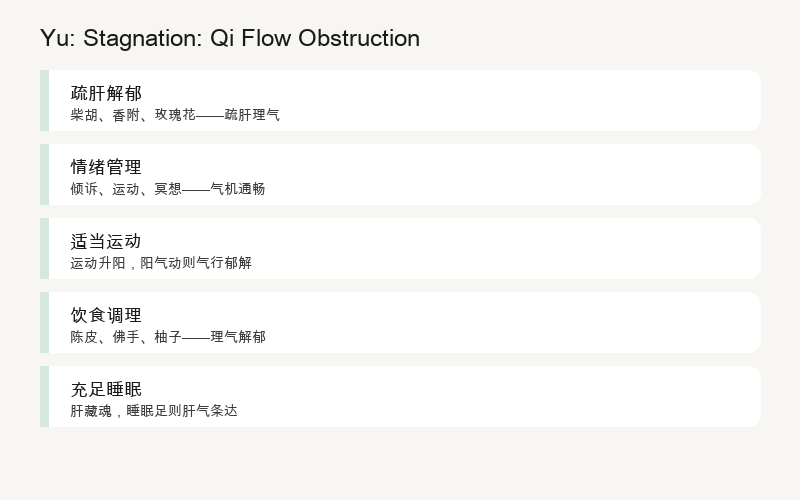
• Exercise is the best "blood-activating and stasis-resolving medicine" (improves microcirculation). Aerobic exercise increases heart rate and cardiac output, improving whole-body blood flow; muscle contraction promotes venous return, reducing blood stagnation; exercise promotes nitric oxide (NO) release, dilating blood vessels and improving microcirculation. Research: 150 minutes of moderate-intensity exercise per week can reduce blood viscosity by 10-15% and increase microcirculatory blood flow velocity by 20-30%. It is not "movement generates yang" mysticism, but the blood flow-promoting effect of exercise physiology.
• Dietary regulation to reduce blood hypercoagulation (treating the root of stasis). High-sugar and high-fat diets → elevated blood lipids → increased blood viscosity; trans fats → vascular endothelial damage → platelet aggregation; lack of Omega-3 → increased pro-inflammatory mediators → vascular inflammation. Eat more deep-sea fish (Omega-3 inhibits platelets, anti-inflammatory), vegetables (antioxidants, protect endothelium), nuts (vitamin E antioxidant), garlic (allicin inhibits platelets), and black fungus (polysaccharides reduce blood viscosity). It is not "diet therapy" mysticism, but precise regulation of nutritional metabolism.
• Keep warm to prevent cold congelation-induced stasis (temperature management). Cold → blood vessel contraction → slowed blood flow → increased blood viscosity. Pay special attention to: keeping warm in winter (especially hands, feet, and abdomen), avoiding cold baths, not setting air conditioning too low (26-28°C is appropriate), and women avoiding cold during menstruation. Research: when ambient temperature is below 15°C, peripheral vascular resistance increases by 30%, and blood viscosity increases by 10%. It is not "cold prevention" mysticism, but temperature physiology vascular protection.
• Emotional management to reduce qi stagnation-induced stasis (stress regulation). Chronic stress → sustained sympathetic nervous system excitement → blood vessel spasm → microcirculatory障碍. Meditation, deep breathing, yoga, tai chi, and walking — these relaxation activities can activate the parasympathetic nervous system, reduce catecholamine levels, and improve vasodilation. Research: 20 minutes of meditation daily, for 8 weeks, can significantly improve nailfold microcirculation and reduce blood viscosity. It is not "qi regulation" mysticism, but neurophysiological stress-vascular regulation.
• Scientific use of blood-activating and stasis-resolving herbs. If you want to use herbs, understand their modern pharmacology and use them precisely: Salvia — coronary heart disease, angina, myocardial ischemia (dilates coronary arteries, inhibits platelets); Notoginseng — traumatic injuries, cerebrovascular disease, blood stasis with low bleeding tendency (anticoagulation, promotes fibrinolysis, protects nerves); Chuanxiong — headaches, stroke sequelae, menstrual pain (dilates blood vessels, improves microcirculation, analgesia); Safflower — menstrual pain, traumatic injuries (anticoagulation, improves microcirculation). Note: use with caution in bleeding tendencies, gastric ulcers, pregnant women, and before/after surgery. It is not "TCM herbs are all-powerful," but precise medication + syndrome differentiation.
These methods don't require you to become a TCM doctor. You only need to understand: blood stasis is the "alarm of blood circulation" — from subcutaneous bruises to heart vascular blockage, all are signals of "blood flow not smooth." Treating stasis is not about "eliminating blood stasis," but about restoring smooth blood circulation, letting blood flow again, letting tissues receive oxygen and nutrients again.
Part 6(续)Practical Methods: Five Ways to Resolve Stasis
Part 7One Minute Summary
🕐 One Minute to Understand "YU"
Yu = Microcirculatory障碍 + Blood Hypercoagulation + Tissue Hypoxia + Impaired Repair.
Trauma-induced stasis = blood vessel rupture → blood extravasation → tissue space blood accumulation → inflammatory response → repair.
Cold congelation-induced stasis = cold → blood vessel contraction → slowed blood flow → increased blood viscosity → thrombosis.
Qi stagnation-induced stasis = chronic stress → sympathetic nervous system excitement → blood vessel spasm → microcirculatory障碍 → hypoxia.
Qi deficiency-induced stasis = decreased heart function → hemodynamic changes → blood stagnation → increased thrombosis risk.
Heat evil-induced stasis = inflammation → vascular endothelial damage → platelet activation → microthrombosis.
Blood stasis constitution = hypercoagulable state + microcirculatory障碍 + blood rheology abnormality.
Blood stasis blocking collaterals = thrombosis + vascular stenosis + tissue ischemia.
Blood leaving the meridians = extravasation + tissue space blood accumulation + hemosiderin deposition.
Activating blood and resolving stasis = antiplatelet + improve microcirculation + reduce blood viscosity + promote fibrinolysis + anti-inflammatory + protect vascular endothelium.
Myths: blood-activating and stasis-resolving is just taking aspirin; blood-activating and stasis-resolving is suitable for everyone; only TCM herbs can activate blood and resolve stasis.
Methods: exercise (promotes blood flow), dietary regulation (low sugar, high-fat, high Omega-3), keep warm (reduces blood vessel contraction), emotional management (reduces stress-induced blood vessel spasm), scientific use of blood-activating and stasis-resolving herbs.
The ancients called it "stasis"; modern people call it "microcirculatory障碍 + blood hypercoagulation."
Different names, but medicine knows: blood circulation needs to be smooth, and obstruction will "produce stasis."
Subcutaneous bruises are shouting: blood vessels are broken, repair needed; vascular blockage is shouting: blood flow is slow, unblocking needed.
This is probably the most simple wisdom of the Chinese people: not eliminating symptoms, but restoring smooth flow — letting blood flow again, letting tissues breathe again.
Making money is the art of living; art is the life after making money
giaogiao Interpreting Traditional Chinese Wisdom · Concept 88
Using the language of modern science to help the world understand traditional Chinese wisdom.
No mysticism, no superstition, no disparagement.
Understanding, not merely believing.
Coach Liu
Written in Florence