Tan (tán) — Phlegm: A Pathological Product
Part 1A Question
Have you ever noticed that some people don't smoke at all, yet every morning they feel phlegm in their throat — can't cough it out, can't swallow it down, like a glob of glue stuck in their windpipe?
Have you ever noticed that people who "get fat from drinking water" are often told by TCM doctors that they have a "phlegm-dampness constitution" — yet Western medical exams show everything is normal? Even more bizarre, TCM says "phlegm clouding the orifices of the heart" can cause dizziness, memory loss, and even confusion, but CT and MRI scans show no "phlegm" at all?
You ask: if phlegm is not just mucus in the throat, then what exactly is it? Why does TCM say "a hundred diseases are caused by phlegm"? Why do some people fail to lose weight no matter what, and TCM says it's "phlegm-dampness"? If phlegm is a "pathological product," how is it produced, and how is it cleared?
Another question: if "phlegm" in TCM is both "form phlegm" (visible mucus) and "formless phlegm" (invisible fluid metabolic waste), what is its modern physiological equivalent? Is it water? Fat? Inflammatory factors? Or some kind of metabolic waste?
What is phlegm, really? TCM calls it a "pathological product." Is that translation enough?
Part 2Traditional Chinese Explanation
The concept of "phlegm" in TCM theory is a "big concept" — not just the mucus coughed up from the respiratory system, but any pathological product formed when body fluids stagnate and condense after metabolic imbalance. TCM believes: the spleen governs the transformation of water-dampness, the lungs govern the regulation of water passages, and the kidneys govern fluid metabolism. If these three organs lose function, fluids stagnate and condense, becoming "phlegm."
— TCM Classic
"Phlegm as a substance rises and falls with qi, reaching everywhere."
— Danxi Xin Fa
"A hundred diseases are caused by phlegm."
— Zhu Danxi
The ancients observed that body fluids normally circulate within the blood vessels, body fluids, and interstitial fluid. But if something goes wrong at any step — weak spleen transformation (weak digestive function), poor lung qi diffusion (poor respiratory and circulatory regulation), or insufficient kidney yang (poor metabolic and excretory function) — fluids stagnate, condense, and thicken, forming "phlegm."
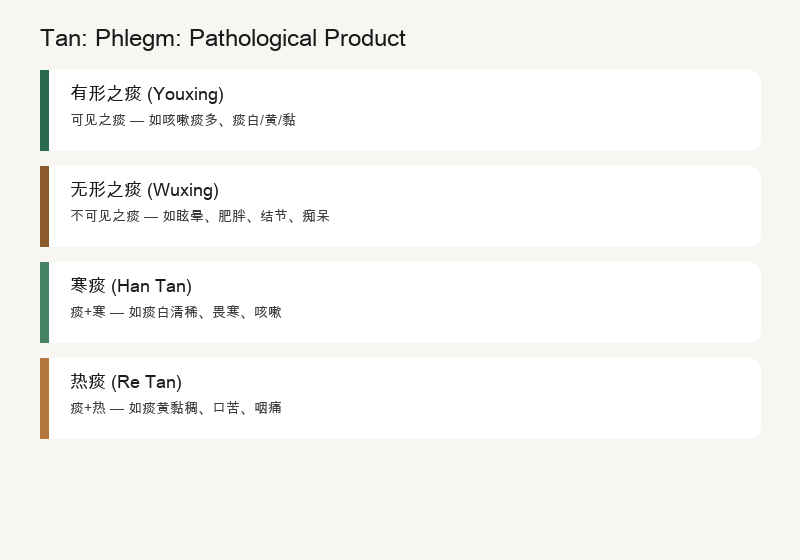
Form phlegm = visible phlegm. Mucus coughed up from the respiratory tract, white, yellow, thin or thick. This is the most intuitive expression of "phlegm" — coughing up lots of phlegm during colds, bronchitis, or pneumonia.
Formless phlegm = invisible phlegm. Fluid stagnation and condensation in tissue spaces, interstitial spaces, lymphatic vessels, and blood vessel walls, forming edema, obesity, nodules, cysts, hyperlipidemia, and blood viscosity. You can't see this "phlegm," but it is "causing trouble."
Pathogenic characteristics of phlegm = moves with qi, reaching everywhere. Once formed, phlegm moves with the flow of qi and blood, settling anywhere in the body — in the lungs causing cough, in the stomach causing nausea, in the heart causing chest tightness, in the brain causing dizziness, in the skin causing obesity, in the meridians causing numbness.
Phlegm-dampness = phlegm + dampness combined. Phlegm is "condensed fluid," while dampness is "diffused fluid." People with a phlegm-dampness constitution are usually obese, with thick greasy tongue coating, sticky mouth, heavy body, and sticky stools.
So what the ancients called "phlegm" is a functional concept — describing various "thick, stagnant" states inside the body after fluid metabolism goes wrong. Not an anatomical substance, but a general term for a pathological state.
But there is one major principle: phlegm moves with qi; when qi flows smoothly, phlegm disappears. If the movement of qi is smooth (normal breathing, circulation, and emotional regulation), phlegm is not easily produced or retained. If qi becomes stagnant (high stress, sedentary lifestyle, emotional suppression), phlegm is produced, condenses, and causes disease. So treating phlegm is not just about "transforming phlegm" but also about "regulating qi" — getting qi to move.
Part 3giaogiao Modern Translation
Okay, now let's translate "phlegm" into modern language.
I'm not going to explain TCM's organ theory. Too abstract. You only need to remember one analogy:
Form phlegm = Respiratory mucus (secreted by goblet cells)
Formless phlegm = Interstitial fluid stagnation (edema, lymphatic stasis) + hyperlipidemia (thick blood) + chronic inflammatory products (cytokines, inflammatory mediators) + metabolic waste accumulation (oxidative stress products, AGEs)
Weak spleen transformation = Decreased digestive system function (slow gastrointestinal motility, insufficient digestive enzyme secretion, gut microbiome imbalance)
Lung qi failure to diffuse = Poor respiratory and circulatory regulation (low alveolar gas exchange efficiency, poor microcirculation)
Insufficient kidney yang = Decreased metabolic and excretory function (reduced glomerular filtration rate, low basal metabolic rate)
Phlegm-dampness constitution = TCM expression of Metabolic Syndrome
Phlegm clouding the orifices = Chronic inflammation → increased blood-brain barrier permeability → neuroinflammation → cognitive decline
Phlegm nodules = Nodules/cysts (thyroid nodules, breast nodules, lipomas) = local condensation of tissue fluid + inflammatory cells + fibrous tissue
That's it. "Phlegm," essentially, is a series of "thick, stagnant" pathological states produced after the body's fluid metabolism becomes imbalanced — including both visible mucus and invisible metabolic waste.
Specifically:
What does "form phlegm" correspond to? It corresponds to respiratory mucus. Goblet cells in the respiratory epithelium secrete mucus, which normally protects the respiratory tract and traps dust and pathogens. But during infection, inflammation, or allergy, mucus secretion becomes excessive and thick, forming "phlegm." TCM's "thin white phlegm" corresponds to transparent or white mucus (viral infection or allergy), while "thick yellow phlegm" corresponds to purulent mucus (bacterial infection, the product of dead white blood cells). It's not "lung heat" mysticism; it is a reflection of the type and stage of inflammation.
What does "formless phlegm" correspond to? It corresponds to multiple modern pathological states: interstitial fluid stagnation (edema, lymphatic stasis), hyperlipidemia (increased blood viscosity), chronic inflammatory products (cytokines IL-6, TNF-α, C-reactive protein, etc.), and metabolic waste accumulation (oxidative stress products, AGEs). This "invisible" "phlegm" is exactly what modern medicine calls the core of "chronic inflammation," "metabolic syndrome," and "oxidative stress." It is not "phlegm-dampness internally accumulated" mysticism; it is the TCM expression of metabolic imbalance + inflammatory response.
What do "phlegm nodules" (nodules, cysts) correspond to? They correspond to "chronic inflammatory encapsulation" in local tissue. For example, a thyroid nodule — local tissue is repeatedly stimulated (iodine imbalance, radiation, inflammation), and tissue fluid, inflammatory cells, and fibrin condense locally to form a nodule. A lipoma — abnormal fat cell proliferation + fibrous tissue encapsulation. Breast hyperplasia — mammary duct epithelial proliferation + local edema. These are all "condensation into nodules" of "phlegm" locally. It is not "phlegm and qi congealing" mysticism; it is the process of local inflammation → repair → fibrosis.
What does "phlegm clouding the orifices of the heart" correspond to? It corresponds to the effect of chronic inflammation on the nervous system. Modern research has found that chronic inflammation (elevated cytokines such as IL-6 and TNF-α) can increase the permeability of the blood-brain barrier, allowing inflammatory signals to enter the brain, leading to neuroinflammation and decreased neuronal function, manifesting as memory loss, poor concentration, and dizziness. TCM says "phlegm clouding the orifices of the heart" causes drowsiness and forgetfulness — not because phlegm is literally "blocking the heart's orifices," but because chronic inflammation → neuroinflammation → cognitive decline.
So, "phlegm" is not mysticism. It is a "comprehensive signal" of metabolic imbalance — involving fluid metabolism, inflammatory response, oxidative stress, and lipid metabolism, the product of multiple systems going out of whack. The ancients used "phlegm" to describe this "thick, stagnant" state; modern people use "metabolic syndrome," "chronic inflammation," and "oxidative stress" to describe it. The core logic is the same: the "water" and "waste" in the body stop flowing and start "causing trouble."
Part 4Life Cases
Four stories to instantly understand what "phlegm" is.
Case 1: Lots of phlegm and cough (form phlegm).
You've been coughing for two weeks after a cold, with constant phlegm in your throat, white and thin. You've taken lots of cough medicine, but the phlegm keeps coming. You ask: why does the body produce so much phlegm?
The truth: this is the respiratory tract's "self-protection mechanism." Cold viruses invade the respiratory tract, and the immune system sends white blood cells to "fight." Dead white blood cells, virus fragments, necrotic epithelial cells, and mucus secreted by goblet cells mix together to form phlegm. The body coughs up phlegm to expel it — this is "cleaning up the battlefield." Cough medicine suppresses the cough, but the phlegm is still being produced — so the cough persists. TCM's "transforming phlegm" is not about suppressing cough, but about helping the body expel phlegm (regulating qi + expelling phlegm). Phlegm is not the enemy; it is the debris after battle — the key is to clean up, not to suppress the debris.
Case 2: Unable to lose weight (formless phlegm — phlegm-dampness constitution).
You are overweight, especially with a big belly. You've controlled your diet and exercised, but the weight just won't come down. Your tongue coating is thick and greasy, your stools are sticky, and your body feels heavy. TCM says you have a "phlegm-dampness constitution." You ask: where is the phlegm in my body?
The truth: this is the TCM expression of "metabolic syndrome." Modern research shows that people with a phlegm-dampness constitution usually have insulin resistance (cells are insensitive to insulin, making it hard for blood sugar to enter cells), hyperlipidemia (thick blood), chronic inflammation (elevated CRP and IL-6), and gut microbiome imbalance (high Firmicutes/Bacteroidetes ratio). This "formless phlegm" makes fat easy to accumulate, energy metabolism inefficient, and inflammation levels high — so losing weight is difficult. It is not "phlegm-dampness" mysticism; it is a collection of multiple manifestations of metabolic imbalance. Modern research has confirmed that certain phlegm-transforming herbs (such as Atractylodes, Poria, and Citrus peel) can regulate insulin sensitivity, improve gut microbiome, and lower inflammatory factors.
Case 3: Thyroid nodule (phlegm nodule).
You found a thyroid nodule on a health check. The doctor says it's benign and just needs monitoring. But TCM says it's "phlegm and qi congealing" and treats it with "phlegm-transforming and nodule-dissolving" herbs. You ask: how can there be phlegm in the thyroid?
The truth: this is a "chronic inflammatory encapsulation" of local tissue. Thyroid nodules are usually: abnormal proliferation of local thyroid cells + tissue fluid stagnation + fibrous tissue encapsulation + inflammatory cell infiltration. This process is like wound scarring — repeated stimulation, repair, and fibrosis. TCM's term "phlegm nodule" describes this "local condensation of pathological products." It is not "phlegm blocking the thyroid," but an inflammatory hyperplastic mass formed by local tissue under repeated stimulation. Modern research shows that certain phlegm-transforming and nodule-dissolving herbs (such as seaweed, kelp, and oyster shell) contain ingredients that regulate thyroid hormones, inhibit fibrous hyperplasia, and reduce inflammation.
Case 4: Constant mental fog and poor memory (phlegm clouding the orifices of the heart).
You're in your forties and recently feel like your brain is foggy, as if covered by a layer of mist. Your memory is declining, and concentration is hard. Your medical exams are normal, but TCM says you have "phlegm clouding the orifices of the heart." You ask: how does phlegm get into the brain?
The truth: this is the effect of chronic inflammation on the brain. Modern research shows that long-term chronic inflammation (possibly from the gut, periodontal disease, or metabolic syndrome) produces cytokines (IL-6, TNF-α) that can cross the blood-brain barrier, triggering neuroinflammation. Neuroinflammation leads to decreased signal transmission efficiency between neurons and reduced synaptic plasticity, manifesting as "brain fog," "memory decline," and "poor concentration." TCM says "phlegm clouding the orifices of the heart" does not mean there is actual phlegm "blocking the heart's orifices," but rather chronic inflammatory signals "interfering" with the normal function of the brain. Research shows that people with metabolic syndrome experience cognitive decline 30–40% faster than normal people.
Four cases, one underlying logic: phlegm is the "alarm bell of metabolic imbalance" — whether it's visible mucus or invisible fluid stagnation, hyperlipidemia, chronic inflammation, or metabolic waste, the body is saying: "My fluid metabolism is in trouble and needs regulation."
Part 5Modern Research
Does "phlegm" have modern scientific research?
Yes, and it matches the TCM concept of "phlegm" extremely well. Scientists don't use the word "phlegm"; they use "metabolic syndrome," "chronic inflammation," and "oxidative stress":
• Phlegm-dampness constitution and metabolic syndrome. Modern research confirms that people with the TCM "phlegm-dampness constitution" universally exhibit the characteristics of metabolic syndrome: insulin resistance, abdominal obesity, dyslipidemia, and hypertension. Studies show that fasting insulin levels in people with a phlegm-dampness constitution are 40–60% higher than in normal people, and inflammatory marker CRP is 2–3 times higher. This is not "constitution mysticism," but a precise correspondence between TCM constitution types and modern metabolic diseases. Phlegm-transforming and dampness-removing herbs (such as Poria, Alisma, and Atractylodes) have been confirmed by modern research to improve insulin sensitivity, lower blood lipids, and regulate gut microbiome.
• Phlegm nodules (nodules) and chronic inflammatory fibrosis. Thyroid nodules, breast nodules, and lipomas — these pathological products called "phlegm nodules" by TCM are confirmed by modern pathology to be local chronic inflammation + repair + fibrosis. Research shows that these nodules usually contain abundant inflammatory cell infiltration, fibrous tissue hyperplasia, and angiogenesis. Certain phlegm-transforming and nodule-dissolving herbs (such as seaweed, oyster shell, and Prunella) contain active ingredients that regulate immunity, inhibit fibrosis, and reduce inflammation. It is not "phlegm-transforming and nodule-dissolving" mysticism, but anti-inflammatory and anti-fibrotic pharmacological mechanisms.
• Phlegm clouding the orifices of the heart and neuroinflammation. Modern neuroimmunology research has found that systemic chronic inflammation (from the gut, periodontal disease, metabolism, etc.) produces cytokines that can activate cerebrovascular endothelial cells, increase blood-brain barrier permeability, and allow inflammatory signals to enter the brain. These inflammatory signals activate microglia (brain immune cells), releasing more inflammatory factors, leading to neuronal dysfunction — this is the pathological basis of "brain fog" and "cognitive decline." TCM says "phlegm clouding the orifices of the heart" — there is no actual phlegm in the "heart orifices," but rather chronic inflammatory signals interfering with brain function. This correspondence is astonishingly precise.
• Modern pharmacology of phlegm-transforming herbs. Modern pharmacological research confirms that traditional phlegm-transforming herbs have clear scientific mechanisms: Pinellia contains alkaloids with central cough-suppressing and expectorant effects; Citrus peel contains volatile oils (limonene) that promote respiratory mucus expulsion and regulate gastrointestinal motility; Poria contains Poria polysaccharides that regulate immunity, promote diuresis, and improve metabolism; Seaweed contains iodine and alginic acid, which regulate thyroid function and soften nodules. It is not "TCM herb mysticism," but precise correspondence between phytochemistry and pharmacology.
These studies fully demonstrate that "phlegm" is a concept that can be precisely described in modern scientific language. The ancients used "phlegm" to describe the "thick, stagnant" state after fluid metabolism goes wrong; modern people use "metabolic syndrome," "chronic inflammation," "tissue fluid stagnation," and "hyperlipidemia" to describe it. The core logic is the same: the "water" and "waste" in the body stop flowing and become "pathological products."
Part 6Practical Methods
Now that you understand "phlegm," how do you use it?
First, dispel a few myths:
• "Phlegm is dirt and must be completely removed." Phlegm is not the enemy; it is the body's "metabolic signal" and "protection mechanism." Normal respiratory mucus secretion protects the respiratory tract; excessive phlegm means the body is "cleaning up." The key is to find out "why there is more phlegm," not to blindly "transform phlegm." Treating phlegm means treating the "source," not just the "symptom".
• "Cough medicine is the best way to transform phlegm." Cough medicine suppresses the cough reflex, but phlegm is still being produced. If the phlegm is caused by infection, it needs to be expelled, not suppressed. Excessive use of cough medicine causes phlegm to stagnate, making secondary infections more likely. It is not "cough suppression equals phlegm treatment," but expelling phlegm + treating the cause is the root solution.
• "Only TCM herbs can transform phlegm." Modern medicine has many "phlegm-transforming" methods: physical therapy (postural drainage, percussion for sputum removal), respiratory training (abdominal breathing, pursed-lip breathing), dietary adjustments (low sugar, low fat, high fiber), exercise (aerobic exercise promotes metabolism), and medication (N-acetylcysteine, ambroxol, and other expectorants). TCM herbs are one tool, not the only one. The key is to regulate metabolism, not "what medicine to take".
Specific methods:
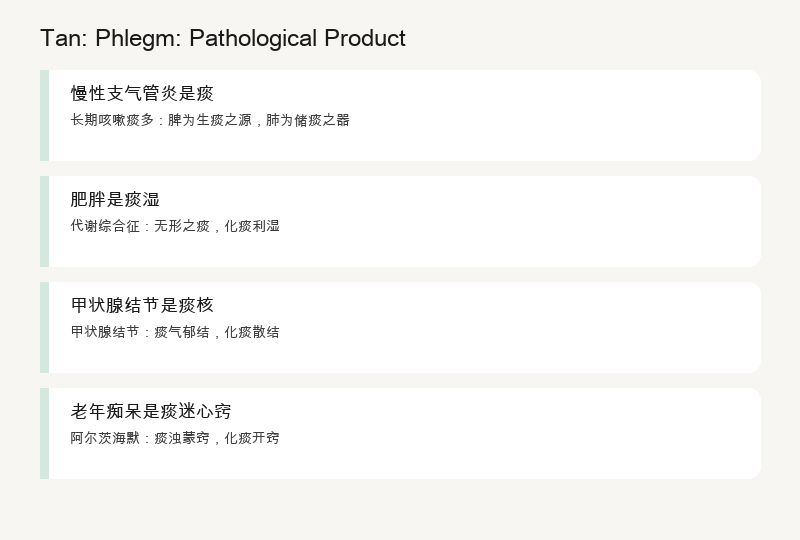
• Regulate the spleen and stomach to reduce phlegm production (treating the root of phlegm). The spleen is the "source of phlegm production" — modern equivalent: digestive system function. Eat less cold and greasy food (reduce digestive burden), eat regular meals (let the gastrointestinal tract work rhythmically), chew thoroughly (reduce undigested food entering the intestines), and exercise moderately (promote gastrointestinal motility). Gut microbiome imbalance is an important source of "formless phlegm" — supplement probiotics and eat more dietary fiber to improve the gut environment, reduce "endotoxins" (such as LPS) entering the bloodstream, and lower systemic inflammation. It is not "strengthening the spleen" mysticism, but the science of digestive health + gut microbiome balance.
• Aerobic exercise to promote phlegm expulsion (treating the symptoms of phlegm). Exercise promotes deeper, faster breathing, helping to expel respiratory mucus; exercise promotes blood circulation and lymphatic return, reducing tissue fluid stagnation; exercise promotes metabolism, lowering blood lipids and blood sugar, reducing "formless phlegm." Research: 150 minutes of moderate-intensity aerobic exercise per week can significantly lower inflammatory factors such as CRP and IL-6 and improve insulin sensitivity. It is not "movement generates yang" mysticism, but the metabolic-promoting effect of exercise physiology.
• Light diet to reduce the source of phlegm-dampness. High-sugar, high-fat, and high-salt diets are the main sources of modern "formless phlegm." High sugar → insulin resistance → fat accumulation; high fat → elevated blood lipids → thick blood; high salt → water-sodium retention → edema. Reduce refined carbohydrates, increase vegetable fiber, eat moderate-quality protein, and control total calories — this is the modern dietary plan for "transforming phlegm." It is not "light diet" mysticism, but precise regulation of metabolic nutrition.
• Respiratory training to help expel phlegm (targeting form phlegm). For chronic bronchitis and COPD patients, practice "abdominal breathing" + "pursed-lip breathing" — increase alveolar ventilation, promote sputum expulsion. "Postural drainage" — through specific positions (such as head-down foot-up position), let gravity help pulmonary secretions flow to the large airways, then cough them out. It is not "diffusing the lungs and transforming phlegm" mysticism, but physical sputum removal methods of respiratory physiology.
• Scientific use of phlegm-transforming herbs. If you want to use herbs, understand their modern pharmacology and use them precisely: Citrus peel + Pinellia (Erchen Decoction) — promotes gastrointestinal motility, expectorates and suppresses cough; Poria + Atractylodes — promotes diuresis, regulates immunity, improves metabolism; Seaweed + Kelp — regulates thyroid function, softens nodules (note: use with caution in hyperthyroidism). It is not "TCM herbs are all-powerful," but precise medication + syndrome differentiation.
These methods don't require you to become a TCM doctor. You only need to understand: phlegm is the "alarm bell of metabolic imbalance" — form phlegm is reminding you that the respiratory or digestive system has a problem; formless phlegm is reminding you that your metabolism, inflammation, and circulatory system need regulation. Treating phlegm is not about "eliminating phlegm," but about restoring the body's metabolic balance, letting the "water" flow again.
Part 6(续)Practical Methods: Five Ways to Transform Phlegm
Part 7One Minute Summary
🕐 One Minute to Understand "TAN"
Tan = Metabolic Waste + Inflammatory Signals + Fluid Stagnation.
Form phlegm = Respiratory mucus (secreted by goblet cells) — phlegm during colds and coughs.
Formless phlegm = Interstitial fluid stagnation (edema, lymphatic stasis) + hyperlipidemia (thick blood) + chronic inflammatory products (cytokines) + metabolic waste (AGEs, oxidative stress products).
The spleen is the source of phlegm = decreased digestive system function; the lungs are the vessel that stores phlegm = poor respiratory and circulatory regulation; insufficient kidney yang = decreased metabolic and excretory function.
Phlegm nodules = Nodules/cysts = local chronic inflammatory encapsulation (thyroid nodules, breast nodules, lipomas).
Phlegm clouding the orifices of the heart = chronic inflammation → neuroinflammation → cognitive decline (brain fog, poor memory).
Myths: phlegm is dirt and must be completely removed; cough medicine is the best way to transform phlegm; only TCM herbs can transform phlegm.
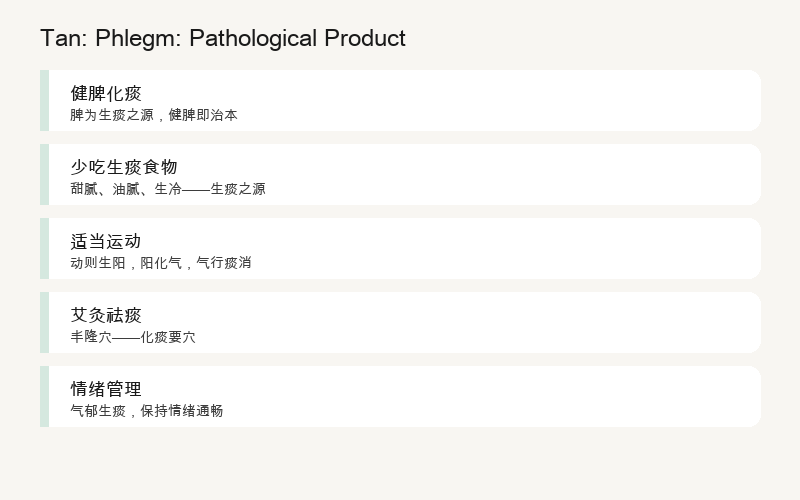
Methods: regulate the spleen and stomach (regular diet + gut microbiome), aerobic exercise (promote metabolism and expel phlegm), light diet (low sugar, low fat, high fiber), respiratory training (physical sputum removal), scientific use of phlegm-transforming herbs.
The ancients called it "phlegm"; modern people call it "metabolic imbalance + chronic inflammation."
Different names, but medicine knows: the body's fluid metabolism needs balance, and imbalance will "produce phlegm."
Form phlegm is shouting: the respiratory tract needs cleaning; formless phlegm is shouting: the metabolic system needs regulation.
This is probably the most simple wisdom of the Chinese people: not eliminating symptoms, but restoring balance — letting the water flow again, letting metabolism return to the right track.
Making money is the art of living; art is the life after making money
giaogiao Interpreting Traditional Chinese Wisdom · Concept 87
Using the language of modern science to help the world understand traditional Chinese wisdom.
No mysticism, no superstition, no disparagement.
Understanding, not merely believing.
Coach Liu
Written in Florence