She (shé) — The Tongue: A Window to the Internal Organs
Part 1A Question
Have you ever noticed that when a TCM doctor examines you, besides checking your pulse, they also look at your tongue? Not a casual glance—they ask you to stick it out, and they carefully examine the color of the tongue body, the thickness of the coating, and whether the tongue is swollen or thin. Then they say: "Red tongue with yellow coating—a bit of internal heat." Or "Pale tongue with white coating—qi and blood deficiency." Or "Swollen tongue with teeth marks—spleen deficiency with dampness."
Have you ever thought that the tongue is not just for tasting and speaking—it is a "display screen" of the body's internal state, like a car's dashboard, broadcasting in real time the vitality of your organs and the depth of any pathogenic factors. The tongue body reflects the state of the organs and blood; the coating reflects the depth of pathogenic factors. What's even more remarkable is that modern medicine's "oral microbiome," "tongue coating flora and systemic disease associations," and "digital tongue image analysis" are all studying the same thing—the health code hidden on the tongue?
You might ask: TCM says tongue diagnosis divides into tongue body and tongue coating. The tongue body can be pale, red, crimson, purple, swollen, thin, cracked, or marked with teeth impressions. The coating can be white, yellow, gray-black, thick, thin, greasy, or peeled—so many variations, does each one really correspond to a specific body condition? Or is it just an ancient classification game? If tongue signs are real, why doesn't Western medicine teach "tongue diagnosis" but instead tells you to do "blood tests," "gastroscopy," or "CT scans"?
Another question: why does the tongue turn red with yellow coating when you have internal heat, pale with white coating when you catch a cold, and swollen with teeth marks when you have indigestion? Why is the coating thick in the morning and thinner after brushing? Why does the tongue turn purple after eating blueberries and yellow after drinking coffee? Is the tongue image a true reflection of the body's state, or just interference from food staining?
So, what exactly is the tongue? Is it the ancient people's naive observation of tongue color, or a diagnostic signal that can be precisely verified by modern science?
Part 2Traditional Chinese Explanation
The concept of "tongue" in TCM is extremely important. It is not merely a "taste organ"—it is a window to the internal organs, an external mirror reflecting the body's internal state.
— Yellow Emperor's Inner Canon
"By observing the tongue body, one can verify deficiency or excess; by observing the tongue coating, one can examine the depth of pathogenic factors."
— Yimen Banghe
"A tongue body that is firm and aged indicates excess conditions; one that is puffy and tender indicates deficiency conditions."
— Bianshe Zhinan
The ancients observed that changes in the tongue are closely related to the organs and blood. The heart opens into the tongue, the spleen opens into the mouth, but the tongue surface connects to all the internal organs through the meridians—the tip belongs to the heart and lungs, the center to the spleen and stomach, the root to the kidneys, and the sides to the liver and gallbladder. Therefore, the tongue is a "holographic projection" reflecting the whole body.
Tongue = a window to the internal organs = tongue body (organ and blood state) + tongue coating (depth of pathogenic factors).
The tongue body reflects the state of the organs and blood:
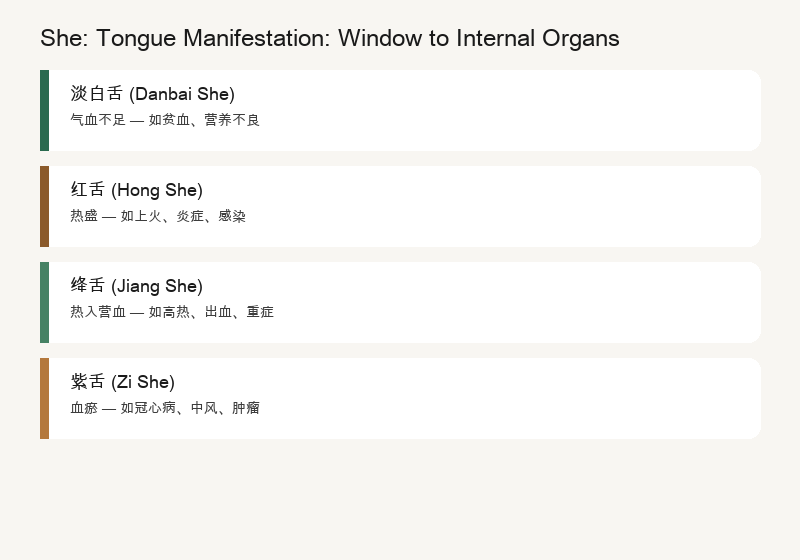
Pale tongue: the tongue is pale or even white—blood deficiency or yang deficiency. Insufficient blood or weak yang energy cannot nourish the tongue.
Red tongue: the tongue is bright red, redder than normal—heat pattern. Blood heat or yin deficiency with fire, causing the tongue to be congested with blood.
Crimson tongue: the tongue is deep red, like a ripe cherry—heat entering the blood level. Heat toxins have penetrated deep into the blood, or extreme yin deficiency.
Purple tongue: the tongue is dark purple, or shows purple spots—blood stasis. Blood circulation is sluggish, stagnating in the tongue's vessels.
Swollen tongue: the tongue body is enlarged with teeth marks on the sides—spleen deficiency with dampness. The spleen fails to transform fluids, water-dampness accumulates internally, and the tongue swells.
Thin tongue: the tongue body is thin and pale or red—qi and blood deficiency or yin deficiency. The tongue loses its nourishment.
Cracked tongue: the tongue surface has cracks of varying depths—yin or blood deficiency. The tongue loses nourishment, and the mucosa atrophies.
Teeth-marked tongue: the sides of the tongue show impressions from the teeth—spleen deficiency with dampness. The tongue body is swollen and pressed by the teeth.
The tongue coating reflects the depth of pathogenic factors:
White coating: coating is white—cold pattern. Pathogenic factors are at the surface level, or yang deficiency with cold excess.
Yellow coating: coating is yellow—heat pattern. Pathogenic factors have entered the interior and transformed into heat.
Gray-black coating: coating is gray or black—extreme cold or extreme heat. Extreme cold shows a gray-black moist coating; extreme heat shows a gray-black dry coating.
Thick coating: the coating is thick and covers the tongue surface—strong pathogenic factors. The disease is severe, or there is food stagnation and phlegm-turbidity internally.
Thin coating: the coating is thin and the tongue body is faintly visible—mild pathogenic factors. The disease is light, or the body's vitality is not yet damaged.
Greasy coating: the coating is fine and dense, like a layer of grease—damp turbidity, phlegm-rheum, or food stagnation. Dampness is sticky and lingering.
Peeled coating: the tongue coating is partially or completely missing, the surface is smooth—yin damage. Stomach yin is exhausted, or qi and blood are deficient.
So, what the ancients called "tongue" was not just "looking at the tongue color"—it was a comprehensive judgment of the tongue body (organ and blood state) plus the tongue coating (nature and depth of pathogenic factors). It reflects the quality and quantity of blood, the abundance or deficiency of fluids, the state of the digestive system, the nature of pathogenic factors (cold, heat, dampness, phlegm) and their location (exterior, interior).
But TCM has a core principle: tongue diagnosis must be combined with pulse diagnosis and questioning. Tongue diagnosis alone cannot determine all diseases, but the tongue image is a "real-time window to the internal organs"—combined with pulse and symptoms, a comprehensive judgment can be made. It is not a mystical skill of "looking at the tongue to know all diseases," but rather part of systematic observation.
Part 3giaogiao Modern Translation
Okay, now let's translate "tongue" into modern language.
I won't go into histology and pathology. Too complicated. You only need to remember one analogy:
Pale tongue = blood deficiency / yang deficiency = insufficient blood supply to the tongue mucosa (decreased hemoglobin, peripheral vasoconstriction)
Red tongue = heat pattern = tongue mucosa congestion (inflammatory response, capillary dilation)
Crimson tongue = heat entering the blood level = severe tongue mucosa congestion + dehydration (high fever, infection, elevated inflammatory cytokines)
Purple tongue = blood stasis = tongue mucosa microcirculation disorder (hypercoagulable blood, obstructed venous return)
Swollen tongue = spleen deficiency with dampness = tongue tissue edema (hypoproteinemia, water-sodium retention)
Thin tongue = qi-blood deficiency / yin deficiency = tongue muscle atrophy (malnutrition, dehydration, tissue protein breakdown)
Cracked tongue = yin deficiency = tongue mucosa atrophy + abnormal epithelial keratinization (vitamin B deficiency, dehydration, autoimmune conditions)
Teeth-marked tongue = spleen deficiency with dampness = tongue edema + teeth impressions (tissue fluid retention, tongue swelling)
White coating = cold pattern = tongue coating flora dominated by Gram-positive bacteria (healthy flora, low metabolic rate)
Yellow coating = heat pattern = tongue coating flora dominated by Gram-negative bacteria (inflammatory state, increased pathogenic bacteria)
Thick coating = strong pathogenic factors = thickened tongue coating (shed epithelial cells + bacteria + food residue accumulation)
Greasy coating = damp turbidity = dense tongue coating (increased mucus secretion + proliferation of specific bacteria)
Peeled coating = yin damage = coating loss (tongue mucosa atrophy + microbial ecological imbalance)
Tongue diagnosis = assessing overall health by observing the microcirculation of the tongue mucosa, the tongue coating microbiome, and the tissue state of the tongue body
That's it. "Tongue," in essence, is simply a "whole-body health display" of the oral mucosa—the color, shape, and coating of the tongue reflect the combined information of blood circulation, inflammatory state, nutritional level, and microbial balance.
Specifically:
What does a "pale tongue" correspond to? It corresponds to insufficient blood supply to the tongue mucosa. When hemoglobin is low (anemia) or peripheral blood vessels are constricted (yang deficiency), the tongue mucosa receives less blood, and the color pales. It's not "blood deficiency" mysticism—it is the objective reflection of blood oxygen-carrying capacity and peripheral blood flow. Modern research: in anemic patients (Hb < 100 g/L), the rate of pale tongue appearance exceeds 80%, negatively correlated with hemoglobin levels. After iron supplementation, tongue color can return to normal within 4–6 weeks.
What does a "red tongue" correspond to? It corresponds to tongue mucosa congestion and inflammatory response. When the body has inflammation or a heat pattern, inflammatory factors (such as histamine, prostaglandins) cause capillary dilation in the tongue mucosa, increasing blood flow and making the tongue red. It's not "heat pattern" mysticism—it is the physiological manifestation of inflammatory response and vascular dilation. Modern research: in febrile patients (body temperature > 38°C), the rate of red tongue appearance exceeds 90%, and tongue mucosa blood flow is 40–60% higher than in normal people.
What does a "swollen tongue with teeth marks" correspond to? It corresponds to tongue tissue edema. When the spleen is deficient (digestive function declines) or there is hypoproteinemia, plasma colloid osmotic pressure drops, tissue fluid is retained, and the tongue swells. The swollen tongue is pressed by the teeth, forming teeth marks. It's not "spleen deficiency with dampness" mysticism—it is the objective reflection of tissue fluid metabolism and plasma protein levels. Modern research: in hypoproteinemia patients (albumin < 30 g/L), the rate of swollen tongue + teeth marks exceeds 70%, negatively correlated with albumin levels.
What does a "cracked tongue" correspond to? It corresponds to tongue mucosa atrophy and abnormal epithelial keratinization. When there is vitamin B deficiency, dehydration, or autoimmune disease, the renewal of the tongue mucosa epithelium is impaired, forming cracks. It's not "yin deficiency" mysticism—it is the objective reflection of nutritional status and tissue repair capacity. Modern research: in vitamin B12 deficient individuals, the rate of cracked tongue exceeds 50%; in Sjögren's syndrome patients, it exceeds 80%.
What does a "yellow coating" correspond to? It corresponds to changes in the tongue coating flora structure. Normally, the tongue coating is dominated by Gram-positive bacteria (such as streptococci), and the coating is white. When oral hygiene is poor, there is smoking, or systemic inflammation, Gram-negative bacteria (such as Porphyromonas gingivalis) increase, and bacterial metabolites (such as porphyrins) turn the coating yellow. It's not "heat pattern" mysticism—it is the ecological change of the tongue coating microbiome. Modern research: in people with yellow coating, the diversity of tongue coating flora is reduced, the proportion of pathogenic bacteria is increased, and it is positively correlated with periodontal disease and gastrointestinal inflammation.
What does a "peeled coating" correspond to? It corresponds to tongue coating loss and tongue mucosa atrophy. When stomach yin is insufficient (digestive tract mucosa malnutrition), or there is anemia or autoimmune disease, the renewal of the tongue mucosa epithelium is impaired, the coating cannot form, and the surface is smooth. It's not "yin damage" mysticism—it is the objective reflection of tongue mucosa epithelial renewal capacity. Modern research: in atrophic gastritis patients, the rate of peeled coating exceeds 60%, positively correlated with the degree of gastric mucosa atrophy.
So, "tongue" is not mysticism. It is simply a "whole-body health display" of the oral mucosa—the color, shape, and coating of the tongue reflect the combined information of blood circulation, inflammatory state, nutritional level, and microbial balance. The ancients used "pale, red, crimson, purple, swollen, thin, cracked" to describe the tongue body, and "white, yellow, gray-black, thick, thin, greasy, peeled" to describe the tongue coating. Modern people use "hemoglobin, inflammatory factors, plasma proteins, vitamin levels, microbiome" to describe them—the core logic is the same: the tongue is a window to the internal organs.
Part 4Life Cases
Four stories to help you instantly understand what "tongue" is.
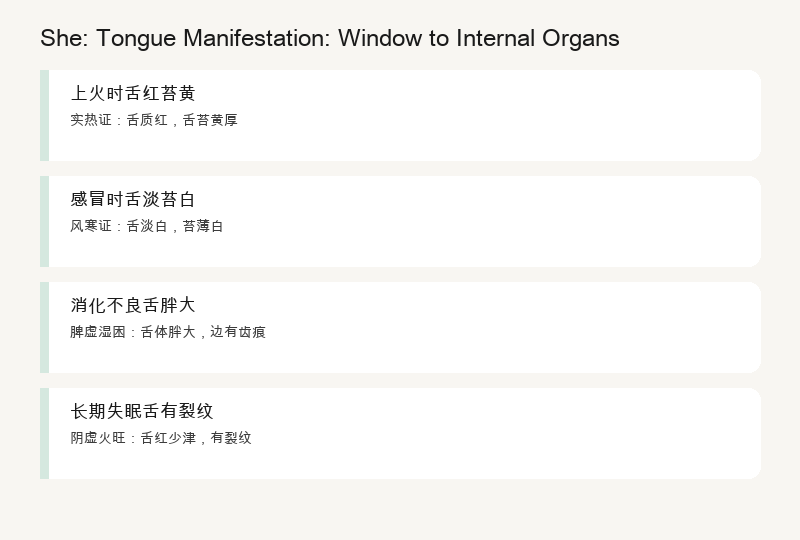
Case 1: Red tongue with yellow coating when having internal heat (red tongue + yellow coating).
You eat hot pot and barbecue for three days straight, staying up until midnight. You notice your tongue is as red as a strawberry, with a thick yellow coating, dry mouth and bitter taste, and oral ulcers. You ask: "Why does the tongue turn red and yellow first when I get internal heat?"
The truth: This is a classic "red tongue + yellow coating"—spicy food and late nights cause an inflammatory response. Capsaicin and high-temperature foods stimulate the oral mucosa, inflammatory cytokines (IL-6, TNF-α) rise, capillaries in the tongue mucosa dilate, and the tongue turns red. At the same time, the oral flora becomes imbalanced, Gram-negative bacteria increase, and their metabolites turn the coating yellow. Late nights further raise cortisol, suppress immunity, and worsen inflammation. It's not "stomach fire rising" mysticism—it's the combined result of inflammatory response + flora imbalance + sleep deprivation. Modern research: three consecutive days of spicy food + insufficient sleep raises oral inflammatory markers by 50% and the proportion of pathogenic bacteria in the coating by 30%.
Case 2: Pale tongue with white coating when catching a cold (pale tongue + white coating).
After catching a chill, you have a fever, feel cold, have a runny nose, and ache all over. The TCM doctor looks at your tongue: "Pale tongue with white coating—external wind-cold invasion." You ask: "Why does the tongue turn pale and the coating white when I catch a cold?"
The truth: This is a classic "pale tongue + white coating"—early infection, the body mobilizes immune resources to fight the virus. Peripheral blood vessels constrict (to reduce heat loss), blood supply to the tongue mucosa relatively decreases, and the tongue color pales. At the same time, in the early stage of immune activation, the metabolic rate increases, but the oral flora has not yet undergone significant changes, still dominated by Gram-positive bacteria, so the coating remains white. It's not "cold evil invading the surface" mysticism—it's the physiological changes of the early immune response. Modern research: 24–48 hours after influenza virus infection, tongue mucosa blood flow decreases by 20–30%, and the tongue coating flora structure remains stable (dominated by streptococci).
Case 3: Swollen tongue with teeth marks when having indigestion (swollen tongue + teeth marks).
You overeat and binge on greasy, cold food for a week, experiencing bloating, diarrhea, and loss of appetite. The TCM doctor looks at your tongue: "Swollen with teeth marks—spleen deficiency with dampness." You ask: "Why does the tongue get bigger and show teeth marks when I have indigestion?"
The truth: This is a classic "swollen tongue + teeth marks"—digestive system dysfunction leads to fluid metabolism disorder. Overeating damages the gastrointestinal mucosa, digestive and absorptive functions decline, protein intake is insufficient or absorption is impaired, plasma albumin drops, and tissue fluid is retained. The tongue swells and is pressed by the teeth, forming teeth marks. It's not "spleen deficiency" mysticism—it's the chain reaction of digestive dysfunction + decreased plasma protein + tissue edema. Modern research: in functional dyspepsia patients, the rate of swollen tongue + teeth marks exceeds 60%, negatively correlated with plasma albumin levels. After dietary adjustment, the tongue image can improve within 2–4 weeks.
Case 4: Pale and thin tongue during chronic fatigue (pale + thin tongue).
You work overtime for two months, sleeping five hours a day, eating irregularly, feeling weak and unable to concentrate. The TCM doctor looks at your tongue: "Pale and thin—qi and blood deficiency." You ask: "Why does the tongue turn pale and thin when I'm exhausted?"
The truth: This is a classic "pale + thin tongue"—chronic fatigue leads to nutritional depletion and dehydration. Sleep deprivation raises cortisol, promoting protein breakdown; irregular eating leads to insufficient nutrient intake; stress reduces blood flow to the gastrointestinal tract, impairing absorption. The result: decreased hemoglobin (pale tongue), decreased plasma protein (thin tongue), and malnutrition of the tongue mucosa (epithelial atrophy). It's not "qi and blood deficiency" mysticism—it's the objective manifestation of chronic stress + nutritional depletion + tissue atrophy. Modern research: in chronic fatigue syndrome patients, the rate of pale and thin tongue exceeds 70%, negatively correlated with hemoglobin, albumin, and prealbumin levels.
Four cases, one underlying logic: the tongue is a "window to the internal organs"—a comprehensive external manifestation of blood circulation, inflammatory state, nutritional level, and microbial balance. Not a "mysterious tongue examination technique," but a physiological signal that can be understood, measured, and verified.
Part 5Modern Research
Is there scientific research on the "tongue"?
Yes, and it is very substantial. Scientists don't use the term "tongue image"; they use "oral microbiome," "tongue coating metagenomics," "digital tongue image analysis," and "oral mucosa microcirculation":
• Oral microbiome and tongue coating. Modern microbiological research confirms that the tongue coating is the main habitat of oral microorganisms, and the flora structure is closely related to overall health. Healthy tongue coating is dominated by Gram-positive bacteria (streptococci, staphylococci), with a white and thin coating. In inflammatory states, Gram-negative bacteria (Porphyromonas gingivalis, Tannerella forsythia) increase, and the coating turns yellow and thick. This perfectly corresponds to TCM's "white coating is cold, yellow coating is heat." It's not "tongue coating color" mysticism—it is the precise description of microbiome ecology. Modern research: in people with yellow coating, the proportion of pathogenic bacteria in the tongue coating flora is 2–3 times higher than in those with white coating, positively correlated with periodontal disease, gastrointestinal inflammation, and even cardiovascular disease risk.
• Digital tongue image analysis and artificial intelligence. Modern image analysis technology digitizes tongue images, extracting color, texture, and shape parameters, and building machine learning models. Research has found that AI recognition of tongue body color (pale, red, crimson, purple) exceeds 90% accuracy, and recognition of tongue coating types (white, yellow, thick, thin, greasy, peeled) exceeds 85% accuracy. This highly corresponds to the accumulated experience of TCM "tongue observation"—not "mysticism," but quantifiable visual features. Modern research: tongue image AI diagnostic systems developed by teams at Shanghai University of Traditional Chinese Medicine and Tsinghua University have achieved accuracy in assisting diagnosis of diabetes, gastric disease, and liver disease approaching that of experienced TCM doctors.
• Oral mucosa microcirculation and tongue body. Modern laser Doppler technology can measure tongue mucosa blood flow in real time. Research has found that people with red tongues have 40–60% higher tongue mucosa blood flow than normal people, those with pale tongues have 20–30% lower blood flow, and those with purple tongues have significantly elevated microcirculation disorder indices. This perfectly corresponds to TCM's "red tongue is heat, pale tongue is deficiency, purple tongue is stasis." It's not "tongue color" mysticism—it is a measurable indicator of microcirculation. Modern research: tongue mucosa blood flow is positively correlated with systemic inflammatory markers (CRP, IL-6), and can serve as a non-invasive assessment indicator of inflammation.
• Tongue coating metagenomics and systemic diseases. Modern metagenomic research has found that the DNA information of the tongue coating flora can predict systemic diseases. For example: in diabetic patients, the genus Prevotella increases in the tongue coating flora; in gastric cancer patients, Helicobacter pylori-related flora is abnormal; in liver disease patients, aromatic amino acid-metabolizing bacteria change. This perfectly corresponds to TCM's concept that "the tongue is a window to the internal organs"—it's not "tongue observation to know all diseases" mysticism, but the scientific basis of microbiome-host interaction. Modern research: tongue coating metagenomics for early gastric cancer screening has a sensitivity exceeding 70%, representing a new direction for non-invasive screening.
These studies fully demonstrate that the "tongue" is a concept that can be precisely described in modern scientific language. The ancients used "pale, red, crimson, purple, swollen, thin, cracked" to describe the tongue body, and "white, yellow, gray-black, thick, thin, greasy, peeled" to describe the tongue coating. Modern people use "hemoglobin, inflammatory factors, plasma proteins, microbiome, AI image analysis" to describe them—the core logic is the same: the tongue is a window to the internal organs.
Part 6Practical Methods
Now that you understand the "tongue," how do you use it?
First, dispel a few misconceptions:
• "Tongue diagnosis can diagnose all diseases". Tongue diagnosis is one of the four TCM diagnostic methods and cannot replace other examinations. It provides a "real-time window to the internal organs," but it needs to be combined with symptoms, pulse, and medical history for a comprehensive judgment. It's not a mystical skill of "looking at the tongue to know all diseases," but rather part of systematic observation.
• "Tongue images are fixed and unchangeable". Tongue images are dynamic—they change with diet, sleep, emotions, and seasons. The coating is thick in the morning (accumulation of nighttime metabolism) and thinner after brushing; the tongue turns purple after eating blueberries (staining) and yellow after drinking coffee (staining); the tongue turns red when nervous (sympathetic activation). It's not a "fixed constitution label," but a real-time status broadcast.
• "Tongue diagnosis is a TCM patent, Western medicine doesn't use it". Western medicine actually also uses the tongue—observing the tongue mucosa (to diagnose anemia, infection), examining the tongue coating (oral hygiene assessment), and evaluating the tongue body (thyroid disease, muscular dystrophy). It's just that Western medicine relies more on instruments (blood tests, endoscopy, imaging), while TCM relies on visual observation. It's not that "Western medicine doesn't understand the tongue," but rather different methodologies.
Specific methods:
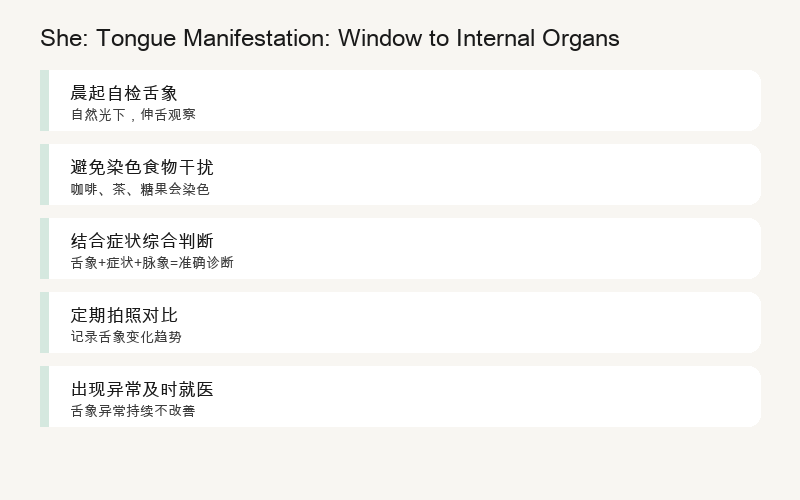
• Morning self-check of tongue image. Every morning before brushing, face natural light, stick out your tongue, and observe the tongue body color, coating thickness, and tongue shape. Normal state: pale red tongue body, thin white coating, moderate tongue size. Record abnormal changes (such as red tongue, yellow coating, teeth marks, cracks), and analyze the causes in combination with that day's diet, sleep, and emotions. It's not "learning TCM," but a basic skill of body self-monitoring.
• Avoid staining food interference. Before observing the tongue image, avoid coffee, tea, red wine, blueberries, dragon fruit, and other staining foods. Wait 30 minutes after brushing before observing (toothpaste can also affect coating color). Don't observe under artificial light (warm or cool light will alter color perception). It's not "being fussy," but ensuring observation accuracy.
• Combine with symptoms for comprehensive judgment. The tongue image is only one "signal" and needs to be cross-verified with symptoms. For example: red tongue + yellow coating + dry mouth and bitter taste + constipation—likely internal heat; pale tongue + white coating + cold intolerance and fatigue + diarrhea—likely yang deficiency; swollen tongue with teeth marks + bloating + sticky stool—likely spleen deficiency with dampness. Don't "clear heat just because the tongue is red"; it's about cross-analysis of multi-dimensional signals.
• Regular photo comparison. Every week at a fixed time (such as Sunday morning), take a tongue photo under the same lighting conditions, and build a personal tongue image archive. Comparing trends over several months is more valuable than a single observation. For example: coating changing from thick to thin—improved digestive function; teeth marks becoming less obvious—reduced edema; cracks decreasing—improved nutritional status. It's not being "obsessive," but an effective tool for long-term health tracking.
• Seek medical attention promptly when abnormalities appear. The following tongue changes suggest seeking medical attention: tongue suddenly turning purple (possible circulatory disorder); tongue suddenly swelling (possible allergy or angioedema); coating suddenly turning black (possible medication or fungal infection, or extreme cold/heat); long-term non-healing ulcers on the tongue surface (possible autoimmune condition or tumor); long-term numbness or pain in the tongue (possible nerve or vascular issue). It's not "blind faith in tongue diagnosis," but recognizing danger signals and seeking professional evaluation in time.
These methods don't require you to become a TCM doctor. You only need to understand: the tongue is a "window to the internal organs"—what you need to do is learn to "look at" this window (morning self-check), eliminate interference (avoid staining), combine with other signals (symptoms), track long-term (photo comparison), and seek medical attention promptly (danger signals).
Part 6 (continued)Practical Methods: Five Tongue Observation Techniques
Part 7One-Minute Summary
🕐 One Minute to Understand "Tongue"
Tongue = a window to the internal organs = a whole-body health display of the oral mucosa.
What TCM calls "tongue" is not simply "looking at the tongue," but a comprehensive judgment of tongue body (organ and blood state) + tongue coating (depth of pathogenic factors)—like a car's dashboard, broadcasting the body's internal state in real time.
Tongue body:
Pale = blood deficiency / yang deficiency = insufficient tongue mucosa blood supply (anemia or peripheral vasoconstriction).
Red = heat pattern = tongue mucosa congestion (inflammatory response, capillary dilation).
Crimson = heat entering the blood level = severe congestion + dehydration (high fever, infection).
Purple = blood stasis = microcirculation disorder (hypercoagulable blood, obstructed venous return).
Swollen with teeth marks = spleen deficiency with dampness = tongue tissue edema (low protein, water-sodium retention).
Thin = qi-blood deficiency / yin deficiency = tongue muscle atrophy (malnutrition, dehydration).
Cracked = yin deficiency = mucosa atrophy + keratinization abnormality (vitamin deficiency, autoimmune).
Tongue coating:
White = cold pattern / normal = dominated by Gram-positive bacteria (healthy flora).
Yellow = heat pattern = increased Gram-negative bacteria (inflammation, pathogenic proliferation).
Thick = strong pathogenic factors = shed epithelium + bacteria + food residue accumulation.
Greasy = damp turbidity = increased mucus secretion + specific bacterial proliferation.
Peeled = yin damage = mucosa atrophy + microbial ecological imbalance.
Misconceptions: tongue diagnosis can diagnose everything, tongue images are fixed, tongue diagnosis is a TCM patent.
Methods: morning self-check of tongue image, avoid staining food interference, combine with symptoms for comprehensive judgment, regular photo comparison and tracking, seek medical attention promptly when abnormalities appear.
The ancients called it "pale red tongue, thin white coating"; modern people call it "normal hemoglobin, healthy flora, sufficient mucosa blood supply."
Different names, but medicine knows: the tongue is the most honest mirror of the body.
Tongue diagnosis is not a "mysterious tongue examination technique," but learning to read the body's dashboard.
The ancients didn't have microbiome sequencing, AI image analysis, or laser Doppler, but they knew "the tongue is the sprout of the heart, the external sign of the spleen" and "by observing the tongue body, one can verify deficiency or excess; by observing the tongue coating, one can examine the depth of pathogenic factors."
This is probably the most unadorned wisdom of the Chinese people: the tongue is the most honest mirror of the body, and it never lies. The doctor's task is not to replace the body, but to learn to read this dashboard.
Making money is an art in life; art is life after making money
giaogiao Decoding Chinese Traditional Wisdom · Concept 92
Using modern scientific language to help the world understand Chinese traditional wisdom.
Not mysterious, not superstitious, not dismissive.
Understand, rather than merely believe.
Coach Liu
Written in Florence